Block wants a national bank charter, but not the kind whose sign promises checking accounts and mortgages.
The company behind Cash App and Square has applied to the Office of the Comptroller of the Currency to create Builders Bank & Trust, N.A., an uninsured national trust bank. If the OCC approves it, the new institution would custody bitcoin and other digital assets, execute certain customer orders, carry out crypto transfers, and provide stablecoin settlement services. It would not accept bank deposits or make loans.
The direct answer
Builders Bank is an application, not an approval. Block announced the filing on September 8, 2026, and the public application is dated September 4. The proposed bank cannot begin operating until the OCC grants the required approvals. It would be a non-depository trust bank under federal supervision—not an FDIC-insured retail bank.
What Block is asking the OCC to approve
Block’s announcement describes Builders Bank as a way to put custody and related fiduciary work under a consistent national framework. The more detailed public charter application identifies four planned activities during the bank’s initial three-year period:
- custody and safekeeping of bitcoin and other digital assets;
- customer buy and sell orders executed on a riskless-principal basis;
- customer instructions to deposit, withdraw and transfer digital assets; and
- stablecoin settlement and transfer services.
The use of “deposit” in that list refers to moving digital assets into custody. It does not turn Builders Bank into a deposit-taking institution. Elsewhere, the filing is explicit: the proposed bank would be non-depository, would not seek FDIC insurance, and would not offer loans.
That distinction matters because “national bank” can sound broader than the application is. This proposal is principally about the legal and supervisory wrapper around crypto custody. It is not a plan to open a new consumer bank account alongside Cash App.
A federal wrapper for a business Block already runs
The application says Block currently conducts its digital-asset business under more than 50 state money-transmitter and virtual-currency licenses. It also says Cash App and Square facilitated about $10.7 billion in bitcoin transaction volume during fiscal 2025, while Cash App had roughly two million monthly accounts that bought, sold or transferred digital assets in the second quarter of 2026.
Those figures come from Block’s application and should be read as company disclosures, not OCC findings. Still, they show the operating scale behind the request. Builders Bank would initially consolidate existing bitcoin custody into a federally chartered trust-bank structure, then seek a broader customer base for institutional-grade fiduciary custody.
Block proposes to own the bank completely through two intermediate holding companies. Its main office would be in Sioux Falls, South Dakota, and Lee Woolley—currently Block’s digital asset strategy lead—would serve as president, chief executive and chief fiduciary officer. The public filing also names proposed compliance, information-security, finance and operations executives.
The custody terms users can see today
A federal charter would change the supervisor. The public documents do not yet establish how customer protections or contractual loss allocation would change.
Block’s Form 10-Q for the quarter ended June 30, 2026 says the company holds the cryptographic keys and internal records for bitcoin kept on behalf of Cash App customers and select trading partners. Customers retain legal ownership and the ability to sell, pledge or transfer their bitcoin. Block says it does not lend or pledge customer bitcoin and does not use it as collateral.
The same filing says customers generally bear fraud or theft losses unless Block caused the loss through gross negligence or willful misconduct. It also says Block occasionally uses third-party custodians. Those are the disclosed terms for the existing arrangement; they should not be assumed to be the final terms of a future trust bank.
The public charter filing does not say whether that allocation of risk would remain in place, what insurance might apply to custodied assets, or how the bank would disclose any use of outside custodians. Those questions are more important to customers than the word “bank” in the proposed name.
Why “uninsured” does not mean “unregulated”
In this context, uninsured means Builders Bank would not maintain federal deposit insurance because it would not accept deposits. It does not mean the proposed institution would operate without supervision. If approved, it would be a national trust bank regulated by the OCC and would exercise fiduciary powers under federal banking law.
Approval is not automatic. The OCC reviews organization, management, capital, risk controls and the permissibility of proposed activities before a new national bank may open. The agency’s digital-assets licensing page describes its table as a list of pending applications; a filing appearing there is not an endorsement or authorization.
Block says it would fully capitalize Builders Bank. The amount is not public. The application’s business plan, information-security program, vendor arrangements, capital details, fiduciary-powers request and several governance documents are in exhibits for which Block requested confidential treatment.
Custody and self-custody under one roof
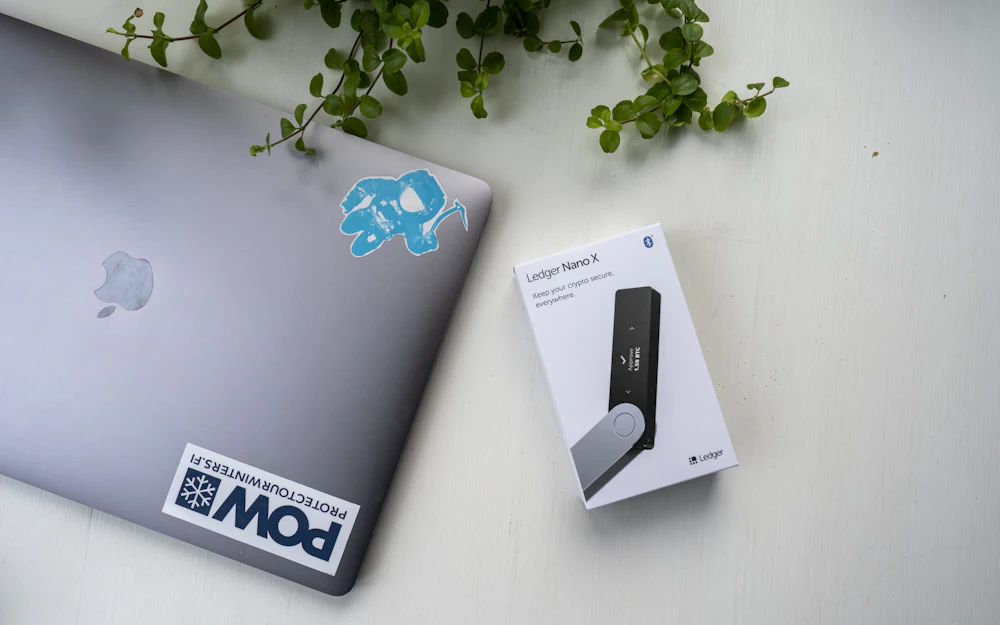
The strategy gives Block two very different bitcoin propositions. Cash App already offers company-controlled custody, while Bitkey is marketed as a self-custody wallet. One asks users to rely on an institution holding key information; the other is designed to give users control over their own keys.
That is not necessarily a contradiction. Different customers make different trade-offs among control, convenience, recovery and regulated service. It does mean that approval of Builders Bank would deepen Block’s role on the custodial side at the same time it continues selling self-custody hardware.
The proposal also differs from the Coinbase-Moov community-bank initiative covered by Crypto Main News. That project aims to connect stablecoin payment and custody tools to existing banks. Builders Bank would instead create a new Block-owned fiduciary institution, subject to OCC approval.
What to watch next
The next meaningful documents will be any OCC public-comment record, a conditional approval or denial, and—if approved—the operating conditions imposed before launch. Those materials could answer what the initial filing does not: required capital and liquidity, asset-segregation controls, key-management standards, vendor oversight, audit expectations and the customer remedies attached to a fiduciary relationship.
Until then, the accurate description is narrow: Block has applied to create a federally supervised crypto custodian. It has not received a charter, Builders Bank is not operating, and the proposal would not create an insured deposit account.
Featured image: Alex Duffy/Unsplash. This article contains no affiliate links.
Investment disclaimer: This article is provided for general information only and does not constitute investment, financial, legal or tax advice. Digital assets are volatile, and all investment decisions and their consequences are your own responsibility.